


Joe Dancey’s Early Life and Teesside Roots
Joe Dancey was born and raised in Eaglescliffe, a suburb of Stockton-on-Tees in the North East of England. His upbringing reflected the region’s blend of suburban life and industrial heritage. His mother, Mary, worked as an NHS stroke nurse at James Cook Hospital before becoming a Labour councillor, while his father was a chemical engineer at the Seal Sands complex. Those family experiences instilled an early awareness of public service and the economic pressures facing Teesside communities.
He attended Junction Farm Primary School and later Egglescliffe Comprehensive. Local coverage from his later political campaign often returned to these details, presenting them as evidence of genuine regional connection. The North East’s history of steel, chemicals and manufacturing formed the backdrop to his childhood, and that industrial landscape would later feature heavily in his public arguments about jobs, skills and green investment. For many British readers following regional politics, this background remains one of the more distinctive elements of his profile.
After school, Joe Dancey moved south. He built a professional path that combined government experience with large-scale organisational work. Early roles included time as a special adviser during the New Labour years, with links to figures such as Baroness Amos and Lord Mandelson. Those positions gave him first-hand exposure to the workings of Whitehall and the practical demands of political delivery.
The London 2012 Olympics and Professional Breakthrough
A defining chapter came when Lord Sebastian Coe recruited him to the London Organising Committee of the Olympic and Paralympic Games. Joe Dancey served as executive assistant and later took on protocol responsibilities at the velodrome. He was part of the relatively small early team that expanded into a vast operation responsible for managing senior political figures, members of the Royal Family and international guests throughout the 2012 Games.
The experience demanded organisational discipline under intense public and media scrutiny. Colleagues from that period have spoken of the intensity of the years leading up to the opening ceremony. For someone from Teesside, it represented immersion in a national project delivered on a global stage. Joe Dancey has since referred to the Games as one of the most significant professional experiences of his life, and the operational skills acquired there have been cited in later discussions of his suitability for senior party roles.
After the Olympics, he moved into public affairs and consultancy. He established Endeavour Advisory, a political and communications practice, and has spoken about using that platform to support Teesside businesses seeking investment and innovation funding. He also held a directorship in HSTGE Ltd, a company registered in 2021. The client list of his consultancy is not publicly detailed, a point that occasionally surfaces in commentary about transparency in political advisory work. These commercial activities sat alongside continuing involvement in Labour politics.
The 2024 Stockton West Campaign
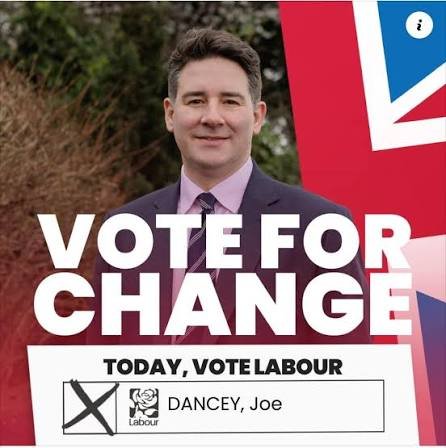
In October 2023, Joe Dancey was selected as Labour’s candidate for the newly created Stockton West constituency. The seat combined most of the former Stockton South with surrounding villages, including areas near Darlington that had previously formed part of Sedgefield. He presented himself as a local candidate with national experience, telling local media: “It’s where I’m from, it’s where I went to school.”
His campaign focused on the need for a green industrial revolution centred on Teesside. He pointed to the region’s heritage in steel and chemicals and argued for net-zero technologies, clean energy and a proper industrial strategy. Campaign materials emphasised family ties, schooling and claimed professional advocacy for local industry since the mid-2010s. Supporters saw a candidate who understood both the area’s challenges and the corridors of power in London. Critics occasionally used the language of “carpetbagging,” noting his long-term residence in Redbridge with Wes Streeting.
On election night in July 2024, Joe Dancey polled 18,233 votes. That total was higher than any other Labour candidate in the Tees Valley, yet it was not enough. Conservative Matt Vickers retained the seat by just over 2,000 votes. The result stood out as a rare Labour reverse in the region during an otherwise decisive national victory. In the days that followed, Joe Dancey publicly thanked supporters, described the votes as an honour, and accepted the arithmetic of first-past-the-post. The campaign had raised his national profile even in defeat.
Appointment to Labour Headquarters
In October 2024, Joe Dancey was appointed Executive Director of Policy and Communications at Labour headquarters. The newly defined role carried a salary of approximately £105,000 and ranked among the more senior positions in the party structure, second only to the general secretary in certain respects. It was created after senior figures moved into government posts following Labour’s election victory. Responsibilities included strategic oversight of media operations and policy work.
The appointment prompted familiar questions about proximity and influence. Joe Dancey is the long-term partner of Wes Streeting, who served as Health Secretary in the early period of the Starmer government. The couple live in Redbridge, north-east London, and became engaged in 2022 after a relationship lasting more than a decade. Coverage of the appointment frequently noted the personal connection. Critics framed it within broader discussions of Labour’s internal networks and the presence of partners and relatives in senior party and government roles. Supporters pointed to his prior experience as a special adviser, Olympic organiser and parliamentary candidate.
Party staff were informed of the appointment through internal messaging. While some welcomed the arrival of someone with practical delivery experience, others privately questioned the depth of his communications background relative to the demands of the post. Such debates are common whenever high-level internal appointments are made, particularly when personal relationships with Cabinet ministers are involved.
Relationship with Wes Streeting and Public Profile

Joe Dancey’s partnership with Wes Streeting has been a consistent feature of media coverage for several years. Streeting has spoken openly about his faith, his sexuality and the personal challenges of reconciling the two. The couple’s shared life in Redbridge places them within the London political and media ecosystem while Joe Dancey has continued to emphasise his Teesside origins.
For UK readers, the relationship illustrates the increased scrutiny that attaches to the private lives of senior politicians and those closest to them. Mentions of one often bring references to the other. This visibility is unavoidable in an era of intense media interest in political households. It also raises legitimate questions about informal influence and the boundaries between personal and professional spheres. Formal rules exist to manage conflicts of interest, yet informal networks have always played a role in British politics.
Joe Dancey’s own public comments have generally focused on regional economic issues, the Olympic experience and the practical work of political organisation rather than on the personal relationship. That restraint has not prevented the partnership from becoming a recurring element in profiles and news reports.
Broader Themes in British Politics
The career of Joe Dancey touches several recurring themes in contemporary UK politics. One is the tension between regional authenticity and metropolitan networks. Candidates from outside London who later base themselves in the capital frequently face questions about whether they remain sufficiently rooted in the places they seek to represent. Joe Dancey’s school and family history in Eaglescliffe provided a strong counter-argument during the 2024 campaign, even as his London residence with Streeting invited scepticism from some voters and commentators.
A second theme is the movement of people between government, party organisation and private consultancy. Many former special advisers and event organisers follow similar paths. The question for the public is whether disclosure rules and cooling-off periods are adequate to maintain confidence. Joe Dancey’s consultancy work and subsequent senior party role sit squarely within that pattern.
A third concerns the internal machinery of a governing party. Once in office, Labour’s headquarters continues to support the parliamentary party, manage messaging and prepare for future electoral tests. Roles such as the one held by Joe Dancey involve coordinating the interface between policy development and public presentation. Success is measured less by personal profile than by the coherence of the party’s voice and the quality of strategic advice reaching the leadership.
Teesside itself continues to face the long-term challenge of industrial transition. Successive governments have promised investment in clean energy, advanced manufacturing and skills. Candidates of all parties compete to claim ownership of that future. Joe Dancey’s emphasis on a green industrial strategy during the 2024 campaign sat within Labour’s wider narrative. Whether such strategies deliver measurable improvements in employment and living standards will be judged over years rather than single election cycles.
Looking Ahead
Joe Dancey’s path from Eaglescliffe classrooms to Olympic protocol rooms and then to a senior role at Labour headquarters is distinctive in its combination of regional origin, high-profile event experience and proximity to a Cabinet minister. For British readers seeking to understand the people who support the current government, his story provides useful context. It shows how operational experience gained on large public projects can transfer into political organisation, how regional candidates navigate the demands of national campaigns, and how personal relationships intersect with formal party structures.
The appointment at Labour HQ places him inside the organisation at a time when the party is managing the realities of government. Mid-term pressures, policy delivery and the preparation of future election messages will all form part of the environment in which he works. Public interest in the individuals occupying these posts is legitimate, as is the expectation that they operate within clear rules of conduct and disclosure.
Joe Dancey remains a figure whose career continues to attract attention precisely because it sits at the intersection of several live political questions: regional representation, the role of advisers and partners, and the practical business of running a modern political party from opposition into government and beyond.
Frequently Asked Questions
Who is Joe Dancey?
Joe Dancey is a Teesside-born public affairs professional and Labour figure who worked on the London 2012 Olympics and later held a senior role at party headquarters.
What is Joe Dancey’s relationship with Wes Streeting?
He is the long-term partner of Wes Streeting; the couple live in Redbridge and became engaged in 2022.
Did Joe Dancey become an MP?
No. He stood for Labour in Stockton West in 2024 and lost narrowly to Conservative Matt Vickers.
What job does Joe Dancey hold at Labour HQ?
He was appointed Executive Director of Policy and Communications in October 2024 on a salary of around £105,000.
What was Joe Dancey’s role in the London Olympics?
He served as executive assistant to Lord Sebastian Coe and handled protocol duties during the 2012 Games.
Why does Joe Dancey receive media coverage in the UK?
Coverage stems from his partnership with a senior minister, his 2024 election defeat, and his subsequent senior Labour Party appointment.

One thought on “Joe Dancey: The Teesside Strategist Shaping Labour’s Inner Workings”